Sustainability has been on a journey. True sustainable outcomes rely on outcomes that work on a financial, environmental, and, most importantly, human level. Placing people at the center of decision-making is no longer optional: it is a strategic necessity, because if people and communities are not brought along, outcomes simply won’t stick.
The Coalition has evolved to integrate people, nature, and economics, merging the Natural and Human & Social Capital Coalitions in 2020 and recently launching the Integrated Decision-Making Framework to provide systems-level guidance across all four capitals. Similarly, financial disclosure has advanced from assessing climate impacts through the Taskforce for Climate-related Financial Disclosures (TCFD), now codified into International Sustainability Standards Board (ISSB) standards, to addressing nature-related dependencies. Most recently, the Taskforce for Nature-related Financial Disclosures (TNFD) announced it is collaborating with the ISSB to transition its guidance directly into formal accounting standards.
The Foundation of the Taskforce for Inequality and Social-related Financial Disclosure (TISFD)
What has been missing from the picture is a standard that focusses on people and inequality and now this has changed. Over the past two years, the Taskforce on Inequality and Social-related Financial Disclosure (TISFD) has been created to conduct a wide range of stakeholder engagement with experts, to ensure its approach is grounded in equitable, practical and robust conceptual foundations. These foundations map the current landscape of human-centric and inequality-focused frameworks, clearly highlighting the mutual impacts and dependencies between business, finance, and communities.
Vincent Siegerink, Senior Technical Specialist, TISFD: “Organisations are navigating a period of profound economic and social change. Across these shifts, inequality and wider people-related issues are increasingly shaping business performance, investment outcomes and the stability of economies and markets. TISFD’s draft Framework recognises that businesses fundamentally rely on people. Human and social capital are shaped and nurtured through the respect and realisation of human rights and by safeguarding and advancing people’s well-being.”
The main audience of the TISFD is business and finance, but with relevance to standard setters and policy makers. Human rights and wellbeing are valid and important to all. Revealing the value of these through the capitals approach demonstrates more clearly why businesses, finance and governments should be more concerned about both from an impact and dependency perspective, and proves that investing in people and avoiding inequality, whilst morally and ethically correct, also makes real business sense and can be seen as an opportunity to reduce long-term risk. Ultimately, making business more sustainable from a financial perspective.
The Framework is a milestone
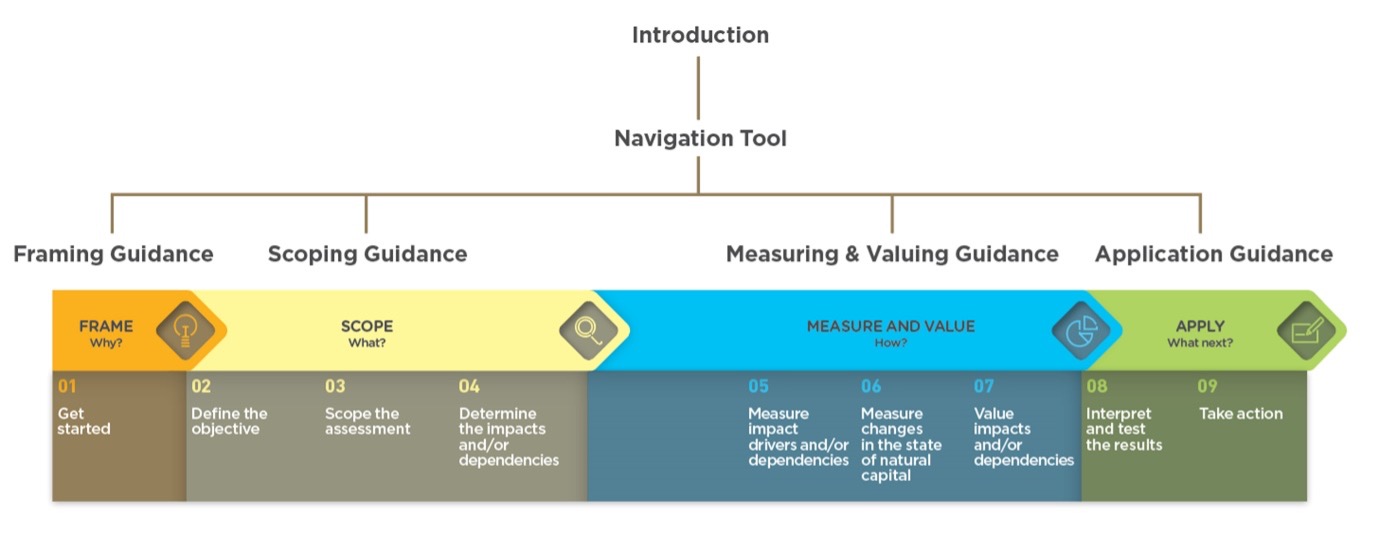
The TISFD conceptual foundation marks a milestone for two reasons: it is the first step towards guidance on how financial institutions and businesses can disclose human and social impacts, including inequalities, into their decision-making processes (whilst complementing the new Capitals Protocol launched by Capitals Coalition last July). It also goes a long way to formalizing the concepts of human and social capital, wellbeing, and human rights, all valid and important, but often not properly used by businesses, leading them to miss their vital importance and fail to think in a holistic way. It forms a strong basis for the entire business and finance community to build towards a more sustainable future, in every sense of the word.
The Taskforce has the unenviable task of trying to reconcile how the equally valid Human Rights, Capitals Approach and Wellbeing approach all interlink. Human rights guarantee the dignity and basic needs required to thrive, wellbeing enables individuals to generate positive outcomes for themselves and society, and human and social capitals treat these capabilities and networks as vital sources of value. People’s wellbeing feed into their ability to function and create positive outcomes for their own and others’ wellbeing, whether or not through a business or community lens, often creates a positive feedback loop. Human rights underpin people’s rights to access and lead healthy, thriving lives that meet their basic needs in a dignified way. Human and Social capitals sit at the heart of this approach and try to put emphasis on the long-term thriving of individuals and communities, seeing people and their interconnections as productive sources of value not only for businesses but also for the families and communities they sit within. The TISFD has sought to combine these concepts through its framing of the “State of People”, which shows that people’s wellbeing and human and social capital are two sides of the same coin, both underpinned by universal human rights.

Link with the Capitals Protocol
Inequalities, much like lack of diversity, are a fundamental risk to modern society. From a capitals perspective, inequalities impact the value that different stakeholder groups receive from the full range of capitals.
The recent Capitals Protocol, part of the Integrated Decision-Making Framework, stressed that how benefits are distributed is more critical than value creation alone, due to diminishing marginal utility, concentrated wealth reduces overall societal wellbeing and social capital TISFD has categorized inequalities through two lenses, vertical inequality (how wealth is distributed between people across society’s tiers) and horizontal inequality (how disparity between different groups occurs). Left unaddressed, both forms weaken social capital, have long-term effects on wellbeing, and create severe local and systemic risks for businesses.

Vincent Siegerink, Senior Technical Specialist, TISFD: “The framework, now open for feedback, is intended to support organisations in identifying and disclosing decision-useful information that can strengthen strategy, risk management and long-term value creation.”
The TISFD beta framework is now open for public consultation until 31st July 2026. You can access version 0.1 here: https://www.tisfd.org/frameworks/tisfd-framework-beta-version-0-1