While visiting Villa d’Este outside Rome, a UNESCO World Heritage site since 2001, a couple of years ago, I was struck by the visual grandeur of the Renaissance palace. A grandiosity that was strengthened by consecutive rooms, with doorways perfectly aligned, creating the compelling vista that a few centuries later was called an enfilade. Peeking through the first door opening, you see room after room after room stretching into the distance, creating a marvellous sense of expectation of an unknown and yet important treasure at the end of the corridor.
Nothing is more powerful than an idea rooted in logic. Walking from room to room in the Villa, it was clear that they were all connected and working towards the same shared purpose.
Capitals Enfilade
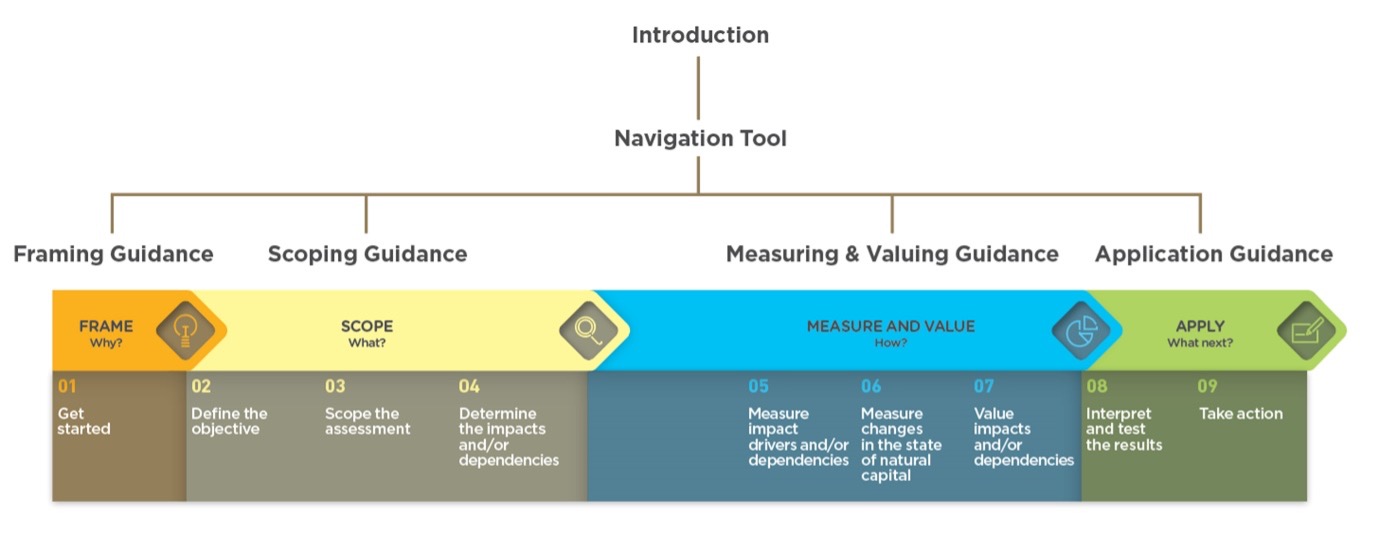
Our approach at the Capitals Coalition is comparable to the enfilade of Villa d’Este. We have created a series of rooms, interconnected stages where work is designed to update the economic system by making visible what has been invisible for too long, so that resilience is strengthened.
- The gateway to the ‘capitals enfilade’ is all about the use of capitals as a systems approach to structure impacts and dependencies on nature and people with consistency. This room provides the clarity to see how success and failure are directly or indirectly underpinned by natural capital, social capital and human capital.
- To translate that understanding into a format that is decision-useful for corporates, markets, and policymakers, the second room comes into view. This is the room of impact valuation, where technical robustness meets practice and the real world. Here, it is all about technical standards and the Global Value Factor Database that support organizations in navigating this translation. Oversight by the Impact Value Standards Board, this room ensures rigor and usability so that organizations can understand the monetary value and relevance of impacts and dependencies.
- The third room is populated by accountants, who integrate the insights from valuation into the way organizations account for performance. In this room, the definition of success profoundly shifts. This is the room where impact accounting takes place and integrated value is anchored in our new consistent definition of success. Traditional accounting often treats nature and people as ‘externalities’. In here, we recognize that a business cannot be successful in a failing society or on a dying planet. Success here is measured by resilience: the ability of an organization to maintain and grow the stocks of capital it relies upon, rather than merely liquidating them for short-term profit.
- This opens the door to the fourth room, the engine room of change, where “logic” meets market. Here the full purpose of capitals, impact valuation, and impact accounting, comes to bloom through internal management, disclosure, and financial flows. The collective insights of the previous rooms allow organizations to gain full insights into future risks and opportunities. Integrating value in balance sheets, P&L’s, risk appraisal, and external reporting allows financial markets to better understand value that translates to real risks and opportunities.

A practical example – Nature on the Balance Sheet
To ground this logic in reality, Capitals Coalition is running several ‘Nature on the Balance Sheet’ projects, where we focus on a central question: how do we integrate nature into accounts and on balance sheets, to recognize its value, both within the company itself as well as by investors?
One of the flagship projects is the Forestry Natural Capital Project, a pioneering global initiative that we have initiated together with the International Sustainable Forestry Coalition (ISFC), and with support from the Taskforce on Nature-related Financial Disclosures (TNFD). This global project connects leading industry practitioners, thought leaders, scientists, investors, and policy experts to create the first harmonized approach for measuring and valuing forestry’s natural capital. The aim is to build the definitive case for investment in sustainable forestry by demonstrating the value of forests and the nature-based solutions they bring. The project is led by Rayne van den Berg, former CFO of Forico, a Tasmanian forestry company, and now leading Value Australia. “When ecologists and accountants unite”, Rayne has often said, “we’ll find a common language of value protection and creation, beyond just traditional financial performance metrics. In the Forestry Natural Capital project we’re translating the benefits provided by sustainable forestry, to both business and society, beyond just economic benefits to include natural capital’s ecosystem services (such as carbon storage, habitat and biodiversity provisioning, clean water, and improved community resilience) into terms that financial capital and commercial markets understand and can trust to make better decisions”.
Later this May, at the Nature Action Dialogue in Cambridge, organized by UNEP-WCMC, we will present intermediate insights from the project, discuss the most recent learnings with practitioners, and explore how these could be emulated by other sectors. “When we embed nature into the heart of a business strategy, we transition from mitigating risks to actively creating value by treating natural capital as a vital asset. At the Nature Action Dialogues, our focus is on supporting companies in moving beyond theory and into practical, measurable implementation,” says Stacey Baggaley, Nature Action Dialogues Lead.
Stepping through the final door of this enfilade, there is only one possible conclusion. Success cannot be measured by looking at a single room in isolation, but by the strength and alignment of the entire structure. Just as the grandeur of Villa d’Este is found in the connection of its parts, the new logical definition of success is found in the integration of our capitals. By measuring the full value of nature, people, and society alongside finance, we ensure that the “grandeur” of our economy isn’t just a facade, but a resilient and lasting reality. Success will only be if our actions are based on an understanding of full value. It is the logic of the entire villa.